Showing posts with label vegetarian. Show all posts

Thursday, 24 September 2015

Pasta with Walnut Sauce

Pasta with walnut sauce

Autumn has arrived so I thought I'd mark the occasion with this wonderful pasta dish. Walnut sauce (salsa di noci) originates from Liguria and is traditionally prepared in autumn when the nuts are harvested. It has a delicate taste but is rich and filling at the same time, perfect for colder evenings, with the added benefit of being full of healthy omega-3.

Every village and town has a slightly different way of making the sauce but all recipes include bread and milk. I've used the sauce with penne here but you can use any pasta you want really; in Liguria, it's usually served with filled pasta. 

As it's a great way of using up leftover bread and milk, I'm sending this over to Foodie Quine, this month's host of No Waste Food Challenge, overseen by Elizabeth at Elizabeth's Kitchen.


Elizabeth's Kitchen Diary                         Credit Crunch Munch
I'm also entering it into Credit Crunch Munch, co-hosted by Camilla At Fab Food 4 All and Helen over at Fuss Free Flavours. 


RECIPE

30g bread, without crusts (you can use white, wholemeal, or whatever you happen to have)
160ml whole milk
160g shelled walnuts
1 clove garlic
20g pine nuts
30g parmesan, grated
4g marjoram
3 tablespoons extra virgin olive oil

Start by roughly tearing up the bread and place in a bowl with the milk, leaving it to soak.

Put all the other ingredients (walnuts, garlic, pine nuts, parmesan, marjoram and oil) in a food processor and whizz together until smooth. 

Remove the bread from the milk, squeezing out any excess and add to the food processor. Pulse to mix everything together. 

Add salt to taste and thin it down with the leftover milk if you think it's too thick.

Serve with any kind of cooked pasta. It's also nice spread on toasted bread.

Pasta con salsa di noci


Wednesday, 3 June 2015

Penne with Asparagus and Ricotta

Asparagus and Ricotta Pasta

A surfeit of meat whilst on holiday in Austria last week and some sunny weather have left me longing for light, summery dishes. Asparagus fits the bill perfectly and is still in season so I decided to try to come up with a pasta dish, rather than the usual asparagus risotto that is frequently seen at this time of year.

There are basically only three ingredients - asparagus, ricotta and a shallot and yet it worked beautifully as a pasta sauce. The delicate flavour of the asparagus wasn't overpowered by the ricotta and the shallot just added a gentle kick. Add a sprinkling of parsley and a generous grating of parmesan and you've got a wonderfully quick, fresh, delicious supper. 

I'm sending this over to Jaqueline's (from Tinned Tomatoes) monthly challenge, Pasta Please, hosted this month by Lucy over at BakingQueen74

pasta please


RECIPE
200g green asparagus
100g ricotta
1 shallot

handful of fresh parsley
4 tablespoons olive oil

300-400g pasta, any shape you want


Wash the asparagus, then cut off the tips and set them aside. Boil the spears in lightly salted water for about 5-7 minutes - they need to be much softer than when eating them on their own as they are going to be blended with the ricotta. 

Place the asparagus spears in a food processor with some salt, pepper, the ricotta and 2 tablespoons of olive oil. Blend until smooth.

Blanch the asparagus tips for about 1 minute in boiling water (I usually just throw them into the water I've got boiling for the pasta), then fish them out and leave to drain. 


Cook the pasta in boiling salted water.

In the meantime, finely chop the shallot and cook gently in a frying pan with the rest of the olive oil until softened.

Add the asparagus and ricotta sauce, the blanched asparagus tips and mix everything gently together, leaving on the heat for a few minutes to warm through. Chop the parsley roughly and add it to the sauce. If it looks too thick, add some of the pasta water to thin it slightly. 

When the pasta is al dente, drain and mix everything together well.

Serve with freshly grated parmesan.


Penne with Asparagus and Ricotta

Thursday, 17 July 2014

Pea and Mint Soup

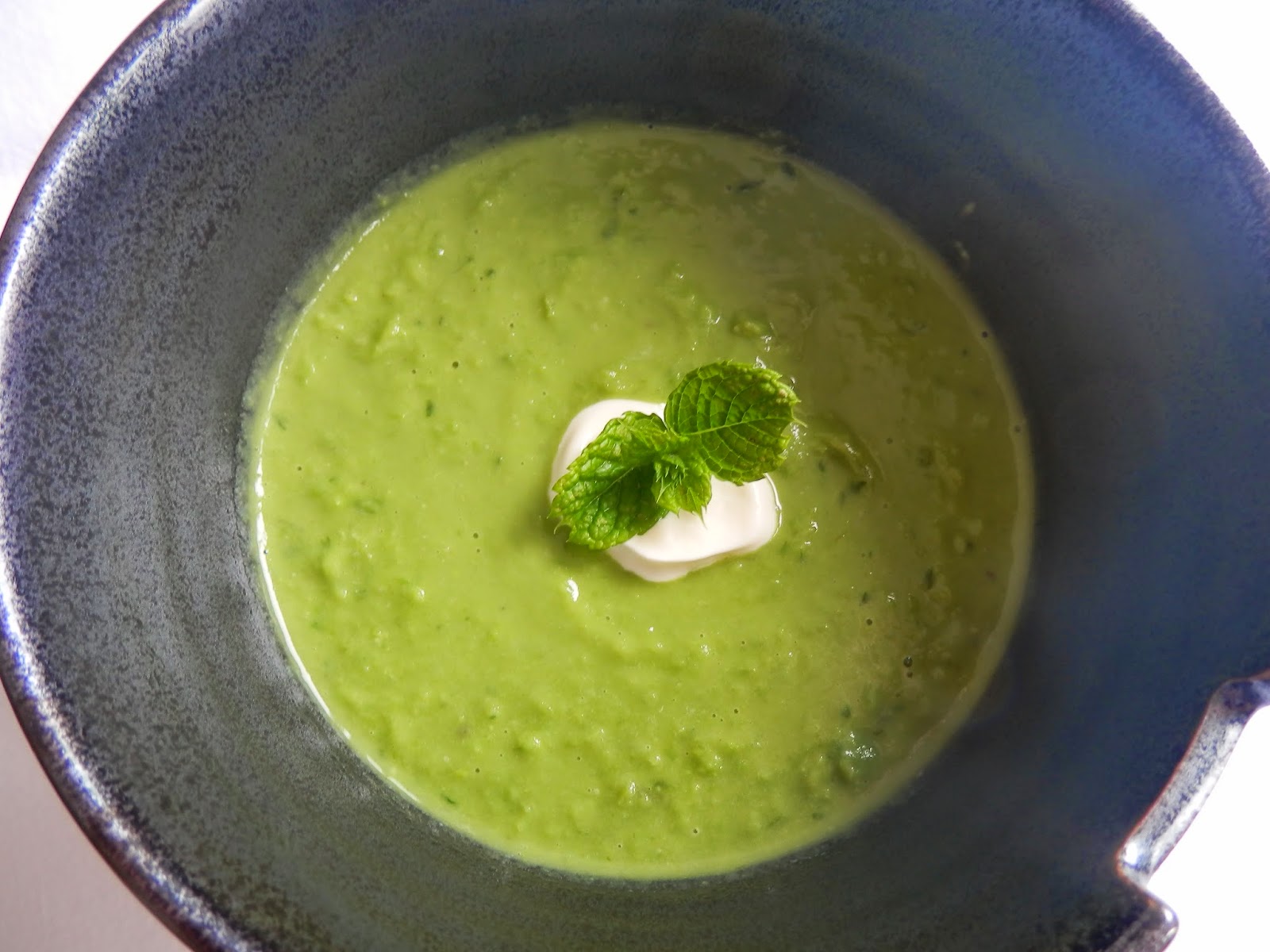
Pea and Mint Soup

A little morning ritual I've been enjoying in this gorgeous summer weather is having my breakfast espresso sitting on a bench in the garden, before heading off to work. I sip my coffee, listen to the birds, feel the sun on my face and survey the garden. 

The bench is next to my little herb corner so the coffee aroma from my espresso mingles with the heady smells of rosemary, thyme and mint. They all seem to be flourishing this year. Indeed, it was seeing that the mint was about to take over everything else that led me to make this delicious, summery, fragrant soup and although I was very liberal in my use of mint, it doesn't overpower the delicate flavour of the peas.

I am entering this soup into a few blog challenges this month:

Simple and in Season –  My Custard Pie (this month's host) & Ren Behan

Simple and in Season - enter your post on mycustardpie.com


No Croutons Required - Lisa’s Kitchen (this month's host) & Tinned Tomatoes


Four Season Food - Eat your Veg (this month's host) & Delicieux


Cooking with Herbs - Lavender & Lovage


RECIPE

1 tablespoon extra virgin olive oil
4 spring onions
700 ml water
500g frozen peas
1 big bunch fresh mint 

Start by boiling the water (in a kettle if you have one). 

Heat the olive oil in a large pan and add the spring onions, roughly chopped (I use the white and green parts). Stir and cook over a gentle heat for a minute so that the spring onions just start to soften.

Add the peas and the just-boiled water. Stir everything together and simmer for about 6 minutes, stirring occasionally.

Strip the leaves off the mint and roughly chop. Add to the soup and continue cooking for a further minute or two. 

Using either a stick blender or normal blender, whizz it all up until you get the consistency you desire. I like it with a bit of texture. Season with salt and pepper.

Serve with a few fresh mint leaves and a swirl of yoghurt or olive oil on top if you like. I usually eat this soup hot but it's also really nice cold. 

Pea soup

Monday, 24 March 2014

Spring Vegetable Pasta Gratin

Pasta al gratin primavera

I often have odd vegetables lurking in the bottom of my fridge. By odd, I don't mean peculiar or rudely shaped, I just mean that I end up with a variety of different vegetables, but only small amounts of each. In an effort to reduce my food waste, I try to create delicious meals that use up these forlorn perishables.

This gratin worked really well and not only allowed me to use up all the vegetables in my fridge, but I even managed to finish some double cream that had been getting perilously near its use-by date as well. It's a lovely dish for spring, with the fresh, multi-coloured vegetables providing a soft contrast to the golden topping.

I'm sending this over to Chris at Cooking Around the World, who is hosting the No Waste Food Challenge this month on behalf of Elizabeth, of Elizabeth's Kitchen Diary.

No Waste Food Challenge

RECIPE - serves 4 

320g pasta (any 'short' pasta will do, I've used penne but shells would be good too)
1 carrot
1 courgette
1 leek
100g lettuce
100g cabbage
1 tablespoon vegetable stock
20g butter
1 tablespoon olive oil
150 ml double cream
100 ml milk
140g fresh Parmesan, grated
handful of chives, chopped

Wash all the vegetables thoroughly. Dice the carrot and courgette, slice the leek, lettuce and cabbage. Heat the butter and olive oil in a frying pan and cook all the vegetables for a few minutes until beginning to soften. Add the vegetable stock, and salt and pepper to taste and continue cooking for about 10 minutes, adding the chopped chives at the end.

Heat the cream and milk in a pan for a few minutes to thicken slightly, then add 100g of the grated Parmesan, salt and pepper. 

In the meantime, cook the pasta in lots of boiling salted water until just al dente. Drain it well and mix with the vegetables. In a greased ovenproof dish, alternate layers of the pasta and vegetables with the creamy sauce and the rest of the Parmesan, finishing with a generous sprinkling of the cheese. 

Put in a pre-heated hot oven (180°C) for 10 mins, then increase the heat to 240°C for a further 10 mins. When it's ready it should be golden, crispy and bubbling. 

Vegetable Pasta Gratin

Monday, 3 March 2014

Tortelli di Carnevale - Carnival Doughnuts

Tortelli di Carnevale

Preparations for lent in Italy last much longer than the one day we have here in the UK when we eat pancakes. Italian festivities include parades and parties as well as sweet treats. The most popular Italian destination for Carnival is undoubtedly Venice for the lavish costumes and masks worn at this time. Yet almost all towns and cities in Italy have their own carnevale, with parades and floats, masks and fancy dress. Most of these take place during the weekend before Shrove Tuesday although in Milan and surrounding areas, the celebrations carry on up until the following Saturday. 

Like many other countries, the local specialities at this time of year are based around eggs/milk/butter/sugar. Exact recipes differ from town to town, and take various forms and names although the unifying characteristic is that they are fried. The little doughnuts here are from the Milan area and are surprisingly light, with a fluffy centre. If you want to be really indulgent, you can fill them with crème pâtissière which is how I used to buy them from my favourite pasticceria.

As these are made completely from scratch, I'm sending this over to Javelin Warrior's wonderful weekly challenge, Made with Love Mondays.

JWsMadeWLuvMondays

RECIPE

50g butter
50g caster sugar
125ml milk
1 teaspoon vanilla extract
grated zest of 1 lemon
150g self raising flour
4 eggs + 1 egg yolk

sunflower oil for frying
caster sugar for dredging


Put the butter, caster sugar, milk, vanilla and lemon zest in a saucepan and bring to the boil over a medium heat, stirring with a wooden spoon.

When it has reached boiling point, remove from the heat and add the sifted flour. Mix well until it forms a ball. Put this back on the heat for a minute or two, until you see a thin white coating on the bottom of the pan.

Remove from the heat and transfer the mixture to a bowl. Leave to cool for about 20 minutes.

When it has cooled, start adding the eggs and extra yolk. Mix them in one at a time, beating vigorously - make sure that each egg is thoroughly absorbed before adding the next. The batter should not be too thin at the end.


When you're ready to make the fritters, fill a high-sided pan about half full of oil and heat until a drop of batter sizzles when dropped in - it should be about 170º-180ºC, hot but not boiling.

Fry rounded teaspoons of batter, making sure you don't overcrowd the pan, about 5 at a time is ideal. Quickly flip them over when they are golden brown and leave them to cook for a minute on the other side.


Take them out carefully with a slotted spoon and place on some kitchen towel to absorb some of the grease. Serve straightaway, with caster sugar sprinkled liberally over. 


Carnival Doughnuts

Friday, 28 February 2014

Anglesey Eggs - Ŵyau Ynys Môn

Anglesey Eggs

I think it's fair to say that Welsh cuisine does not play a prominent role on the world's culinary stage. However, Wales does now take pride in supplying some fine produce, enjoying international recognition for its beef and lamb, fresh fish and seafood and some unique cheeses. There is an increasing number of chefs in Wales eager to make full use of local foods, made and supplied by artisan food producers and traditional dishes are slowly finding themselves back in the limelight.

This then is my St. David's Day contribution to the Welsh culinary revival. Traditional to Anglesey, this delicious dish of potatoes, leeks, eggs and cheese reflects a time when meat was a scarce luxury, like the other more well-known recipes for Glamorgan sausages and Welsh rarebit. I like to think I haven't strayed too far from how my ancestors would have made it; the leeks and potatoes came from ten miles away, the eggs from a local farm and the cheese... well, the cheese is Caerphilly so it admittedly had a slightly longer journey. 

As I'm sending this to the Shop Local challenge, created and hosted by Elizabeth from Elizabeth's Kitchen Diary, I would like to mention the Llainwen eggs I used in this dish. These beautiful free range eggs have a deep orange yolk that I haven't found anywhere else. The farm, situated in the Vale of Clwyd, has been in the family since 1739 and all their eggs come from a variety of traditional breed hens who happily roam around the fields, truly free-range. Visitors are always welcome on the farm, to see first-hand how the hens are looked after. As you can see from the photos, you get seven, multi-hued eggs in every gorgeous box. 


RECIPE - Serves 4 as a starter or 2 as a main course

300g potatoes
3 leeks
oil (olive/sunflower/vegetable)
3 eggs
300ml milk
20g butter
20g plain flour
50g Caerphilly cheese, grated
salt and pepper

Peel the potatoes and cook in boiling salted water for about 15-20 minutes, until soft. 

In the meantime, prepare the leeks by slicing them in half length ways and then chopping them finely. Put them in a colander and wash thoroughly under running water. Drain well. Heat a drizzle of oil in a large frying pan, add the leeks and cook gently until softened, being careful not to colour them as leeks can turn very bitter if they start to brown. 

Hard boil the eggs, drain and remove the shells when they're cool enough to handle.

Pre-heat the oven to 200°C. 

Drain and mash the potatoes, then mix with the softened leeks and season to taste with salt and black pepper. 

To make the cheese sauce, melt the butter in a saucepan and add the flour. Cook for a couple of minutes, then off the heat, slowly add the milk, whisking continuously. When all the milk has been added, bring slowly to the boil and keep whisking over a medium heat until thickened and smooth. Remove from the heat and stir in half the cheese. 

Slice the eggs in quarters and arrange in an ovenproof dish (or use individual dishes as I have done in the photo). Spoon the potato and leek mixture around the eggs and pour the cheese sauce over the top. Sprinkle over the remaining grated cheese. 

This can all be prepared in advance and left in the fridge until you want to cook it.

Cook in the preheated oven for about 15-20 minutes, until bubbling and golden brown. 

Ŵyau Ynys Môn

Monday, 25 November 2013

Spiced Pumpkin and Chocolate Cupcakes


I am inordinately proud of these squidgy little mounds for a variety of reasons. Firstly, the taste - they're intensely chocolatey and lightly spiced which makes them perfect for this time of year. Secondly, the texture - you think they're going to be quite dense but actually these are celestially light and wonderfully moist. Thirdly, they last really well, indeed they taste even better the day after baking. Finally, they're a cinch to make. Last year I made a chocolate and pumpkin full size cake but made everything from scratch, including the pumpkin puree. Luckily, since then, I've been able to find tinned pumpkin puree in the local supermarket and it not only makes the whole thing so much easier, I actually think it's better because it's not so watery.

Contrary to expectation, I also feel that these little cakes can almost be classed as healthy. That wasn't my intention but as taste has definitely not been compromised, I look on it as an added bonus. There's no butter at all and only a scant amount of sunflower oil. There's a fair bit of sugar I know but come on, these are cakes after all.

In the Italian tradition, these little cakes (or muffins I suppose) are ideal for breakfast and as they're easy to eat (no icing to contend with), perfect for 'breakfast to go', this month's Breakfast Club Challenge, hosted by Utterly Scrummy Food for Families, created by Helen from Fuss Free Flavours.


As these are baked and vegetarian, I'm also entering them into Bake Fest, hosted by Cooks Joy.

BakeFest-300

They're also off to Family Foodie Challenge, created by Lou at Eat Your Veg and hosted by Vanesther at Bangers and Mash where the theme is lunchbox ideas. I think these would be perfect.


RECIPE

95g plain flour
20g cocoa powder
1 teaspoon baking powder
half a teaspoon bicarb of soda
half a teaspoon ground cinnamon
half a teaspoon ground ginger
a pinch of salt
125 ml sunflower oil
2 large eggs
210g pumpkin puree (half a can)
100g granulated sugar
90g light brown sugar

12-bun muffin tin lined with 12 cupcake or muffin papers

 Pre-heat the oven to 180°C

Start by sifting the flour, cocoa, baking powder, bicarb of soda, salt and spices into a bowl.

In another bowl, whisk together all the other ingredients (oil, eggs, pumpkin and sugar). Gently fold in the flour mixture until combined. 

Scoop the mixture in to the cases, filling each case as equally as possible (I use an ice cream scoop for this).

Put in the oven and bake for about 20-25 mins or until a cake tester comes out clean. 

Remove from the oven. Take the cakes out of the tin as soon as you can and leave to cool on a wire rack.


Monday, 16 September 2013

Halloumi and Roasted Peppers

Roasted Peppers and Halloumi

I suppose I have to face the fact that it's over. Linens and sandals have been relegated to the back of the wardrobe, the tan has faded, suitcases are once again gathering dust in the attic and memories of lazy, sun-filled lunches, sipping rosé, overlooking a startlingly blue Mediterranean have been firmly pushed to the back of my mind. Summer has gone and it doesn't look as though it will be back any time soon. Of course, I love autumn so my mourning won't last long, it's just that it seems to have arrived very quickly, leaving me feeling as though I haven't had a chance to properly say goodbye to summer.

This dish then is my farewell to summertime. It works well as a light lunch or as a starter. The brightly-hued, sweet-tasting peppers seem to retain the warmth of the sun that is sadly lacking at the moment and are a perfect foil for the salty halloumi; the citrussy dressing, fresh with herbs, complements both ingredients perfectly.

Go on, put those flip-flops away but make sure you've got this ready to eat afterwards. It would even go well with a glass of rosé or two...

This post is making its way over to the ever popular challenge, Cooking with Herbs. The challenge is created and hosted by Karen from the wonderful Lavender and Lovage.

Herbs on Saturday for June: Cooking with Herbs Challenge - Win a Pot of Culinary Lavender Grains

I'm also sending it to Javelin Warrior's wonderful weekly challenge which encourages everyone to cook from scratch, Made with Love Mondays.

JWsMadeWLuvMondays

RECIPE - serves 2 as a light lunch or starter

1 x 250g pack of halloumi
1 red pepper
1 yellow pepper

For the herb dressing
150ml extra virgin olive oil
a large handful of  fresh flatleaf parsley
1 teaspoon dried oregano
1 tbsp capers, drained
juice and zest of half a lemon

The dish works best when the peppers and dressing are at room temperature and the halloumi is hot so you can prepare the peppers and dressing in advance and finish the dish by grilling the halloumi just before eating. 

Start by roasting the peppers. Preheat the oven to its maximum temperature and put the peppers in whole, on a greased baking tray. Leave for about 25 mins, turning occasionally. The skins should be blackened and starting to peel away. Remove from the oven and put them in a plastic bag to cool before peeling them and eliminating the seeds and core. Slice each pepper lengthways into quarters or thirds.

For the dressing, start by roughly chopping the parsley and capers. Add to the olive oil along with the oregano, the lemon zest and the lemon juice. Shake (or whisk) everything together well. 

When you're ready to eat, heat a griddle pan until very hot. Drain the halloumi and cut into about 8 slices, brush each slice with a little olive oil and griddle for about 1-2 mins each side, until the cheese is lightly charred and beginning to soften.

Arrange the peppers and halloumi on the plates (making sure each plate has both red and yellow peppers) and spoon over the dressing.

Serve with lots of crusty bread. 


Friday, 7 June 2013

Gnudi - Tuscan Spinach and Ricotta Dumplings

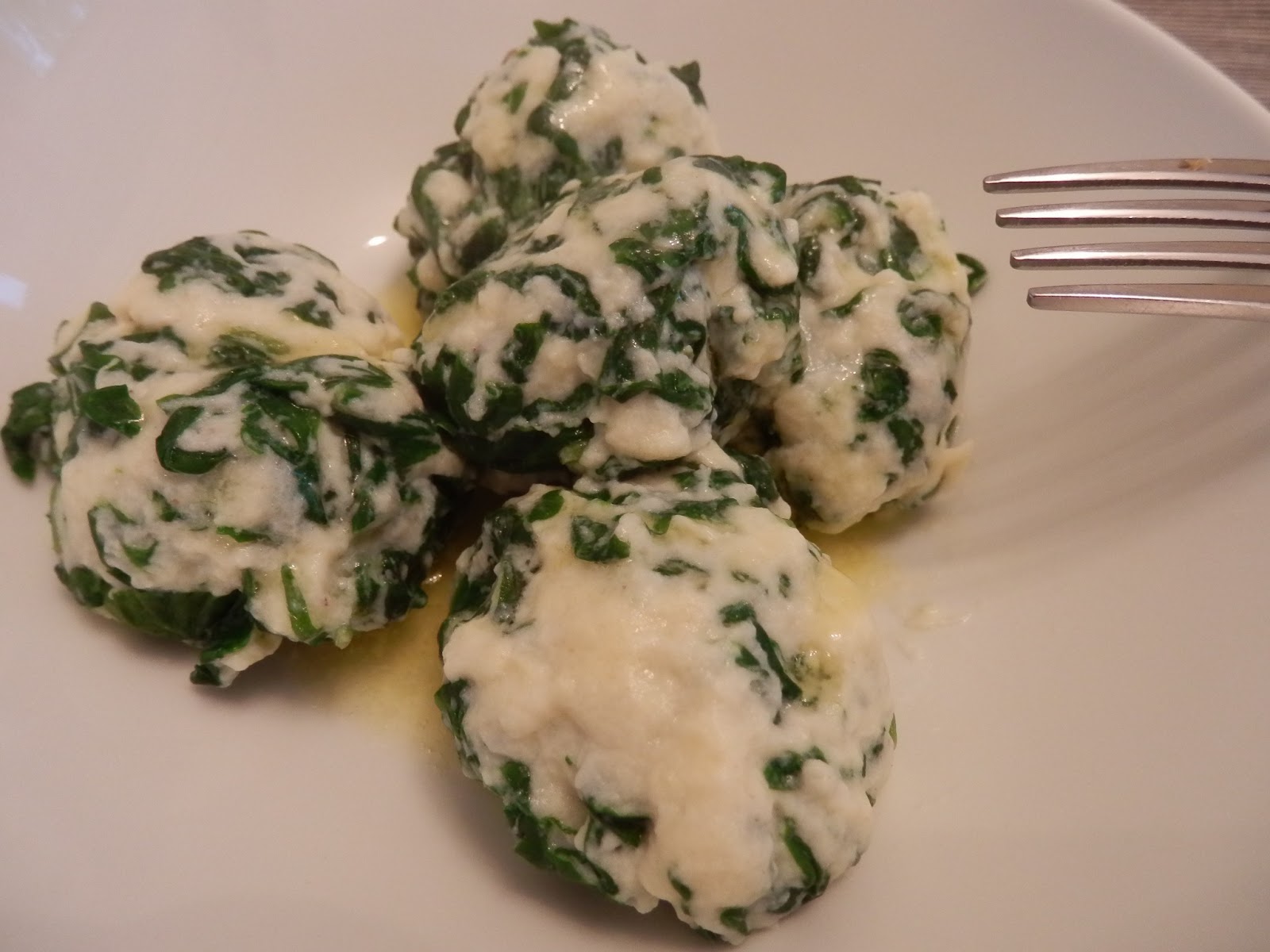
Gnudi

Although they may resemble gnocchi, these little dumplings are in fact quite different as they don't contain potatoes. This makes them light and delicious. Originally from Tuscany, they are basically the filling of classic ravioli but without the outer pasta layer hence the name Gnudi which in Tuscan dialect means 'nude'. You don't often find them in restaurants as they don't keep well once they're made but they're easy enough to prepare at home and well worth it. They just need delicate handling - they're so light they're practically little clouds.

The classic version contains only spinach but I like to add fresh parsley to the mixture as well, to give the flavour a bit of a lift. You could add other herbs too - I like the idea of fresh mint or maybe basil.

This post is making its way over to one of my favourite challenges, Herbs on Saturday, soon to become Cooking with Herbs and sporting a lovely new badge to boot! The challenge is created and hosted by Karen from the wonderful Lavender and Lovage.

Herbs on Saturday for June: Cooking with Herbs Challenge - Win a Pot of Culinary Lavender Grains

I'm also sending it to Javelin Warrior's wonderful weekly challenge which encourages everyone to cook from scratch, Made with Love Mondays.


JWsMadeWLuvMondays

RECIPE - serves 4

450 g fresh spinach
50g fresh parsley, roughly chopped
500 g ricotta cheese
2 eggs, beaten
70 g flour
100 g Parmesan cheese, freshly grated
salt
nutmeg
pepper

6 sage leaves
50 g butter

Drain the ricotta of excess liquid by leaving in a colander for a few hours or overnight in the fridge. 

Wash the spinach, drain briefly and put in a saucepan just as it is to wilt, turning it over from time to time so that the leaves on top cook as well as the leaves on the bottom. Allow to cool slightly then chop roughly. 

Meanwhile, mix the ricotta cheese with the flour, eggs and parmesan, stir well and add a pinch of nutmeg,  and season well with salt and pepper. Stir and add the chopped spinach and fresh parsley. Mix everything together thoroughly. 

Bring a large pot of salted water to the boil. 

Shape the mixture into oval dumplings, slightly smaller than golf balls. Place gently into the boiling salted water. They are ready when they float to the surface, it usually only takes a few minutes. 

While the gnudi are cooking, melt the butter with the sage leaves. 

Remove the gnudi from the water with a slotted spoon, place in a serving dish and pour over the melted butter. Serve with more freshly grated Parmesan. 


Ricotta and Spinach Dumplings

Friday, 19 April 2013

Roasted Pepper and Ricotta Pasta

Pasta with Peppers and Ricotta

A staple of Italian cuisine, peppers are incredibly versatile. When roasted  they become sweet, soft and smoky but I love them raw too, so crunchy and refreshing, although you rarely find them in their uncooked state in Italy as they're considered highly indigestible. As an aside, the Italian word for peppers is peperoni which I thought worth mentioning here in case of any confusion when ordering a pizza in Italy; pizza con peperoni is a pizza with peppers, if you want US style 'Pepperoni Pizza', then you should  ask for pizza con salame piccante. Just thought it might be useful...

In this pasta recipe, the peppers are roasted and peeled before being blended with ricotta to form a thick creamy sauce which is then added to some softened onion, fresh tomatoes and chilli. The tomatoes provide a nice acidity which works well with the smooth, rich sauce and chilli gives a little kick.

This month's One Ingredient Challenge, started by Laura of How to Cook Good Food and Nazima from Franglais Kitchen, is Cheese so I'm sending this over to Nazima who is the host for April. I absolutely love cheese so can't wait to see the round up at the end of the month!

One Ingredient April  Cheese

As the theme is Chilli, I'm also sending this to Shaheen for Allotment 2 Kitchen who is April's host of Pasta Please, a wonderful challenge started by Jac from Tinned Tomatoes.


RECIPE
2 red peppers
100g ricotta
half a fresh chilli, finely chopped
half an onion
100g cherry tomatoes
4-5 tablespoons olive oil

300-400g pasta, any shape you want

Start by roasting the peppers. Preheat the oven to its maximum temperature and put the peppers in whole, on a greased baking tray. Leave for about 25 mins, turning occasionally. The skins should be blackened and starting to peel away. Remove from the oven and put them in a plastic bag to cool before peeling them and eliminating the seeds and core.

Place the peppers in a food processor with some salt, the ricotta and 4 tablespoons of olive oil. Blend until smooth, adding more olive oil if necessary and adjust the seasoning.

Cook the pasta in a boiling salted water.

In the meantime, finely chop the onion and cook gently in a frying pan in a  little olive oil until softened. Add the chilli and cook for a further few minutes. Halve the cherry tomatoes and add them to the onion and chilli, tossing them briefly together for a minute or so.

Add the pepper and ricotta sauce, mix everything gently together and leave on the heat for a few minutes to warm through. If it's all looking a bit thick, add some of the pasta water to thin it slightly. When the pasta is al dente, drain and mix everything together well.

Serve with some freshly grated parmesan.


Roasted Pepper and Ricotta Pasta


Thursday, 28 March 2013

Courgette Pesto (with Gorgonzola Ravioli)


I feel I have to come clean about one thing before I start - the ravioli in the picture are not homemade. We do make our own pasta but it's definitely a weekend activity and as this was a mid-week meal, I'm afraid the ravioli came from a deli.

Having cleared that up, I can announce with great joy that this is a random recipe.The Random Recipes challenge is the brainchild of Dom from Belleau Kitchen. Its aim (in his words), is 'to encourage us to use our recipe books more whilst also being more adventurous with our cooking... to shake up the 'everyday' chef and bring out a few little ideas we may have never tried before...'. It's a great concept and I'm delighted that I got organised enough to actually enter this month, albeit rather late.

The theme for March is Cuttings and Clippings. Like most of us, I have a couple of files bulging with recipes ripped out of magazines, hand written scraps of paper and photocopies of photocopies, origin unknown. My cookery books also occasionally yield up forgotten treasures from within, the scrawled sheets fluttering to the floor as I flick through their pages. Not wishing to flout the rules of the challenge, I closed my eyes and took my chance. My random selection was this 'Pesto di Zucchine', a clipping from an Italian food magazine called 'Sale e Pepe'. Although I probably cut it out about four years ago, I had never actually made it so the Random Recipe challenge ethos certainly worked this time.

My favourite pesto still has to be the classic genovese recipe, that magical mix of basil, pine nuts and pecorino, tossed simply with some al dente linguine. This pesto had a very delicate flavour which I don't think would work on its own with normal pasta but when paired with filled pasta like tortellini or these ravioli, it compliments the taste without overpowering.

This post is making its way over to Dom at Belleau Kitchen for Random Recipes and I'm hoping I'm still in time for Pasta Please, from Jac at Tinned Tomatoes, hosted this month by Jen over at Blue Kitchen Bakes.


Random Recipes #26 - March       


RECIPE, from Sale & Pepe magazine, Dec 2008

300g courgettes
50g fresh basil leaves
30g pine nuts
a clove garlic
50g fresh parmesan, grated
extra virgin olive oil
salt and pepper

Slice the courgettes and fry gently in a tablespoon of olive oil. After a few minutes, add the crushed clove of garlic and continue cooking for about 15 mins until the courgettes are soft and golden.

Put the courgette mixture in a blender or food processor together with the basil, pine nuts and enough olive oil to make a thick paste, probably about 5 or 6 tablespoons.  Blend until smooth and stir through the grated parmesan at the end.

Cook whatever pasta you're using until al dente and toss everything together gently.  Serve with a few basil leaves scattered over and a shaving or two of parmesan.


Saturday, 16 February 2013

Pasta with peppers


I'm almost embarrassed to call this a recipe as there are basically only two ingredients, pasta and peppers, and the method is laughably simple, requiring no more than a bit of chopping and some stirring. From this, you may think that it's not really worth it - I mean how tasty can it be if there's so little involvement in the making of it? However, that would be a great mistake because this dish is utterly delicious. Cooked slowly, the peppers begin to caramelise in the olive oil, becoming soft and sweet, completely transformed from their raw, indigestible state. The juice they give off combines with the oil to turn into a sauce which then coats the pasta. All in all, I think it's close to pasta perfection. If you like peppers, I urge you to try this.

As this month's theme is peppers, I'm very pleased to be able to join in with the Pasta Please challenge, started by Jac over at the amazing Tinned Tomatoes and hosted this month by Lisa from We don't eat anything with a face. I'm really looking forward to seeing what other people have come up with this month.


RECIPE - serves 3-4
  • 350g long pasta - bucatini (thick spaghetti-like pasta with a hole running through it) is ideal here but failing that you can use linguine (as I have for the photo) or even spaghetti
  • 6 peppers (if you can get different colours, it makes for a more visually pleasing dish; red, yellow and orange are better for flavour but you can use a small green one too if you must but remember that they don't match up to the others for taste)
  • extra virgin olive oil
  • salt and pepper to taste
  • lots of fresh parmesan to serve
Wash the peppers and deseed. Roughly slice them up. In a large frying pan (with a lid), pour in enough olive oil to just coat the bottom. Put over a medium heat and add the peppers, turning them in the oil. Cover and cook for about 15 minutes, stirring frequently.

After 15 minutes, remove the lid and continue cooking uncovered for a further 10-15 minutes, stirring occasionally. The peppers are ready when they are soft and just beginning to brown at the edges. At this stage, season to taste.

Cook the pasta according to instructions, making sure you've salted the water well - it really does make all the difference. Near the end of the cooking, take a ladleful of the pasta cooking water and add to the peppers. When the pasta is al dente, drain well and mix with the peppers. Drizzle over a little more olive oil if you think it needs it and serve with lots of freshly grated parmesan.


Sunday, 21 October 2012

Puglian Broad Bean dip - Purea di Fave


Months ago, GL's parents gave us a precious bag of dried, skinned, split broad beans from Puglia, precious because I have yet to find these pale skinned beans in the UK. Once a staple of la cucina povera, 'peasant cooking', made into a puree and traditionally served with a boiled green vegetable, it is now more often found gracing the tables of chic local restaurants as part of the groaning antipasti table or served instead of the pasta course, as a primo. Don't be put off by the simplicity of the recipe - although the beans in their pallid, wrinkled, uncooked state don't seem to promise anything good, the transformation that takes place with what is basically no more than the addition of water and an onion is incredible. The puree is creamy and satisfying, with the subtle taste of the beans taking centre stage. It really is so much more than the sum of its parts.

I had intended to cook this months ago in my first flush of enthusiasm after receiving the beans. However, the need for overnight soaking meant that I couldn't just cook them whenever I felt like it and they gradually got pushed to the back of the cupboard. It was with joy then that my hand fell upon these as I was having a rummage in order to (finally) participate in this month's Random Recipes Challenge from Belleau Kitchen, Store cupboard Finds. Unfortunately, I know that only one of my cookery books has recipes using dried broad beans - La Cucina Salentina, a small publication I bought whilst last on holiday in Puglia. It has two recipes using this ingredient, a soup and this puree - I opted for the puree as I have always wanted to try making it at home and I must say, I was not disappointed. My only problem now is where to get more of these elusive beans...


RECIPE - taken from La Cucina Salentina

Ingredients
400g dried, skinned, split broad beans
1 small onion, sliced
extra virgin olive oil


Rinse the beans, put them in a large bowl or pan and cover them with cold water. Leave to soak overnight or for at least 10 hours.

Drain the beans and rinse them again under the tap. Place in a large pan, cover with cold water and bring to the boil over a medium heat, skimming off the foam as it rises to the surface. Add the sliced onion, lower the heat and part cover. Cook at a gentle simmer for about one hour, topping up with hot water if the beans start to run dry. When the beans are very soft and starting to disintegrate, remove from the heat and season with 1-2 teaspoons of salt.

Leave to cool slightly and then puree the beans with a stick blender until smooth or the consistency that you prefer - I like them with a bit of texture. Stir in a tablespoon of extra virgin olive oil and add a little water if you prefer a looser puree. Adjust the seasoning to taste. I also add some dried chilli flakes.

Serve with a drizzle of olive oil and some wilted spinach or with warm toasted bread if you prefer the non-traditional route.